
If your boiler pressure keeps dropping, you’re not alone. Across Hamilton and Lanarkshire, this is one of the most common heating complaints, particularly during the colder months when central heating systems work hardest. The good news is that most pressure problems are straightforward to diagnose and fix once you understand what’s happening inside your heating system.
Quick Answer: Why Is My Boiler Pressure Falling?
Falling boiler pressure usually means water is escaping from your central heating system or air is being released. Either way, the sealed loop that circulates hot water around your radiators is losing something it needs to maintain the correct pressure.
For most UK domestic boilers in Hamilton and wider Lanarkshire, the normal range sits around 1–1.5 bar when the system is cold, rising to about 2 bar when the heating is running.
The most common causes of a boiler pressure drop include:
- Minor leaks in pipework, radiator valves or joints
- Recently bled radiators releasing air and water
- A faulty expansion vessel that can no longer absorb water expansion
- A dripping pressure relief valve letting water escape outside
Is low boiler pressure dangerous? Generally not to people. Modern boilers simply shut themselves down when the pressure is too low, which protects internal components. However, this leaves your Hamilton home without heating or hot water until the problem is sorted.
At a glance: If your pressure keeps dropping back under 1 bar after topping up, stop repressurising and call a Gas Safe registered engineer in Hamilton. Repeatedly adding water without finding the root cause can make things worse.
What Is Boiler Pressure and Why Does It Fall?
Boiler pressure is the force that pushes heated water around your radiators and pipes in a sealed central heating system. Without adequate system pressure, water won’t circulate properly and your boiler won’t heat your home efficiently.
The pressure is measured in “bar” on a gauge—either a round dial with a needle or a digital display. You’ll usually find your boiler pressure gauge on the front panel or underneath modern combi boilers.
In a sealed system, pressure falls when:
- Water escapes through leaks or the safety valve
- Air is released (for example, after bleeding radiators)
- The expansion vessel fails to compensate for temperature changes
There’s an important distinction between:
- Temporary, slight drops (for example, losing 0.2 bar over several months in a 3-bed semi in Hamilton)—this is completely normal
- Rapid or repeated drops (daily or weekly pressure loss)—this indicates a fault that needs investigation
Older open-vented systems with a tank in the loft behave differently from modern combi or system boilers, but persistent pressure loss is still a sign of a more serious issue worth investigating.
What Should Your Boiler Pressure Be in a Hamilton Home?
The “right” figure can vary by manufacturer—Ideal, Worcester Bosch, Vaillant, Baxi and others may have slightly different recommendations—so your boiler manual is always the final word.
As a general guide for most installations:
| Condition | Recommended Pressure |
|---|---|
| System cold and off | 1–1.5 bar |
| Heating running (typical winter evening) | 1.5–2 bar |
| Maximum safe pressure | Below 3 bar |
Many gauges have a green zone marking the recommended range and red areas to show when pressure is too low or when there’s too much pressure in the system.
If the needle stays below 1 bar, the boiler may lock out and display an error code such as “F1”, “E119” or similar, depending on your make and model. When this happens, the boiler operates in a protective shutdown mode.
Homeowners in Hamilton and Lanarkshire should check pressure at least once a month, and especially before the heating season kicks in—late September or early October is ideal for an annual check.
Common Reasons Boiler Pressure Keeps Dropping
Most falling-pressure issues come down to four broad causes: leaks, recent work on the system, failing internal components, or user error. Understanding which applies to your situation is the first step toward a fix.
Some causes are visible—damp patches on ceilings in an older sandstone tenement in Hamilton, for instance. Others are hidden inside the boiler casing or under floorboards.
The main culprits include:
- Minor leaks in radiators, valves or pipework
- Leaks from the boiler itself
- Bleeding radiators recently
- A faulty expansion vessel
- A dripping pressure relief valve
- Repeatedly topping up and diluting corrosion inhibitor
Repeatedly repressurising without finding the root cause is not a fix. In fact, it can accelerate internal corrosion over time, turning a simple repair into an expensive replacement.
Leaks in Radiators and Pipework
Small leaks account for over 70% of pressure drop incidents in UK domestic heating systems. They’re the most frequent reason for a gradual pressure loss over days or weeks, especially in older properties around Hamilton with 15–30-year-old pipework.
Signs to look for include:
- Green or white crust on radiator valves (calcium or copper oxide deposits)
- Rust marks on radiator panels
- Swollen skirting boards near pipes
- Flaking paint or wallpaper near heating pipework
- Leaking water stains on ceilings below upstairs radiators
Any visible leak should be repaired, not just “topped up over.” Some leaks may be hidden under floors or behind plasterboard, making them harder to spot.
If you cannot locate a leak yourself, arrange for a Gas Safe engineer or heating specialist familiar with Lanarkshire housing stock to investigate. A drip every few seconds can equate to 0.1 bar loss per day, which adds up quickly.
Leaks or Faults Inside the Boiler
Sometimes no leak is visible externally because the problem lies within the boiler casing. This could be on a plate heat exchanger, an internal joint, or parts inside that have corroded over time.
Signs of an internal leak include:
- Staining or rust marks directly under the boiler
- A damp patch on the wall just below the boiler unit
- Water dripping from within the boiler’s casing
In condensing boilers, the condensate trap and pipe can cause confusion—clear water dripping from the condensate pipe is normal operation, but water from elsewhere isn’t.
Only a Gas Safe registered engineer is legally allowed to remove the sealed case on a gas boiler in the UK. If you suspect an internal leak, book a qualified engineer rather than attempting to diagnose it yourself.
Bleeding Radiators Recently
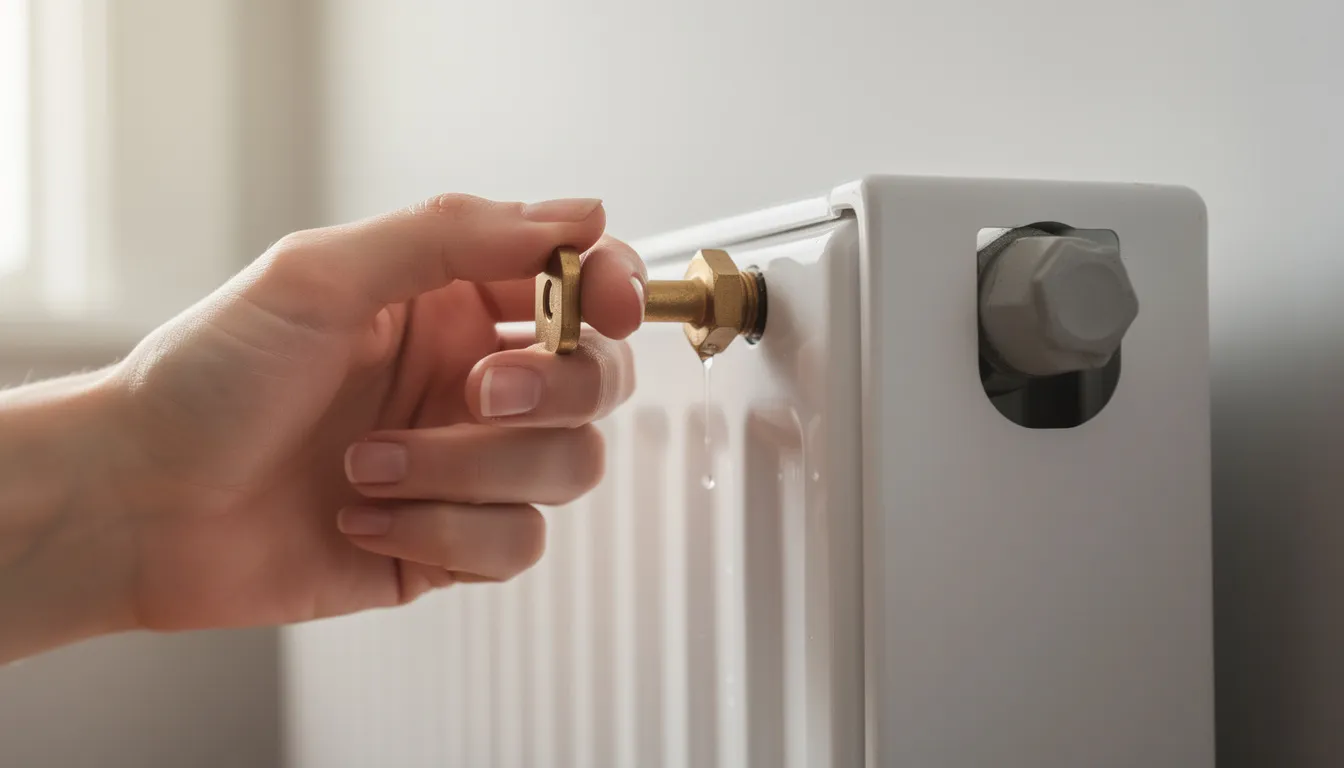
Bleeding radiators in November or December to cure cold spots is extremely common across Lanarkshire homes. However, bleeding always releases some water along with the trapped air, which naturally lowers system pressure.
This is why the gauge often falls after a full-house bleed. If you’ve recently bled your radiators, a pressure drop is completely normal and not necessarily cause for worry.
Best practice when bleeding a radiator:
- Turn the heating off and let it cool first
- Use a radiator key to release air until water starts to escape
- Check the pressure gauge afterwards
- Top the pressure back up to around 1–1.5 bar once you’ve finished
If you find yourself repeatedly bleeding without resolving cold spots, this may point to sludge buildup, internal corrosion, or incorrect pump settings—issues that need professional attention.
Faulty Expansion Vessel
The expansion vessel is the component that absorbs the expansion of water as it heats up. Water expands by approximately 4% when heated from 10°C to 80°C, and the vessel keeps pressure stable during this process.
If the air side of the vessel fails or loses its charge—common after 7–10 years—pressure may rise very high when the boiler heats water, then drop too low when the system cools.
Typical symptoms include:
- Pressure climbs towards 3 bar when heating is on
- The pressure relief valve drips water outside
- The gauge reads under 1 bar the next morning
This cycling pattern—pressure rises sharply then falls dramatically—is a classic sign of expansion vessel failure. Checking and recharging or replacing an expansion vessel costs around £200–400 in Hamilton and requires a trained engineer with the correct pump and gauges.
Pressure Relief Valve (PRV) Letting By
The pressure relief valve is a safety valve, usually set to open around 3 bar, with an outlet pipe that runs outside your property and points towards the ground. Its job is to release boiler pressure if it gets dangerously high.
To check if your PRV is the problem, find the copper or plastic pipe on the outside wall near your boiler location. If it’s wet or dripping when the boiler is off and cold, the PRV may be passing water when it shouldn’t.
Once a PRV has opened repeatedly—often due to expansion vessel problems—debris can prevent it from sealing properly, causing ongoing pressure loss even after the original fault is fixed.
Replacing or reseating a PRV should be done by a Gas Safe engineer, not as a DIY task. Costs in Hamilton typically run £150–300 depending on the boiler make.
Repressurising Too Often and Diluted Inhibitor
Regularly topping up your system with fresh cold mains water dilutes the corrosion inhibitor that protects your heating system from internal rust and sludge.
The consequences of diluted inhibitor:
- Internal corrosion accelerates
- Corrosion creates gas and sludge
- Gas leads to more air in the system, requiring more bleeding
- Bleeding drops pressure again, prompting more topping up
If your boiler has been topped up many times over a year in your Hamilton property, the system water should be tested and possibly drained, flushed and refilled with the correct amount of inhibitor. Products like Fernox F3 can extend system life by 5 years when properly dosed.
This work is best done by a heating engineer who can also advise whether a magnetic filter would help protect your boiler from magnetite particles—particularly useful in Lanarkshire homes with older cast iron radiators.
How to Check If Your Boiler Pressure Is Low
Most people only notice a problem when the heating won’t come on or the shower runs lukewarm. But checking your pressure gauge regularly gives you earlier warning of developing issues.
To check your pressure:
First, switch the boiler off and let it cool for at least 30 minutes. Pressure readings when the system is hot can be misleading.
Next, locate the pressure gauge. On a modern combi boiler, it’s usually on the front panel. On some older models, you may need to look underneath the unit near the pipework. System boilers may have the gauge near the hot water cylinder.
Read the number or colour zone on the display. If the needle sits in the green zone (typically 1–1.5 bar), you’re fine. If it’s below 1 bar or in the red zone, your pressure is too low.
Many boilers in Hamilton homes will also show a flashing symbol or error code on the digital screen when pressure drops below the minimum threshold for normal operation.
Record the reading with the date—for example, “0.6 bar cold on 4 March 2026”—so you can track whether it drops again over the following days.
How to Safely Increase Boiler Pressure When It’s Fallen
Homeowners can usually top up the pressure themselves if their boiler manual allows it. However, if you feel unsure at any point, there’s no shame in calling a boiler engineer—it’s better than causing damage.
The process differs slightly between:
- Combi boilers with a built-in filling key or lever
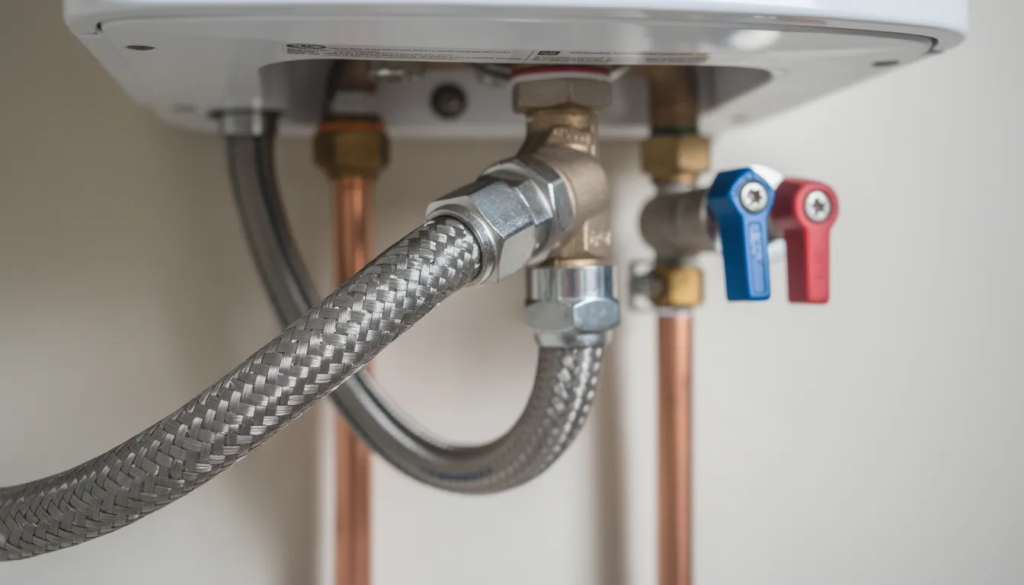
- System and conventional boilers with an external silver braided filling loop, usually found under the boiler or near the hot water cylinder
Step-by-Step Topping Up
- Switch off the boiler and let it cool completely
- Locate the filling loop—look for a silver braided hose with one or two valves
- Ensure both filling loop valve handles are accessible
- Slowly open the valves to let cold water into the system
- Watch the pressure gauge as water enters—you should hear it flowing
- Close the valves once the needle reaches around 1–1.5 bar
- Ensure both valves are fully closed afterwards
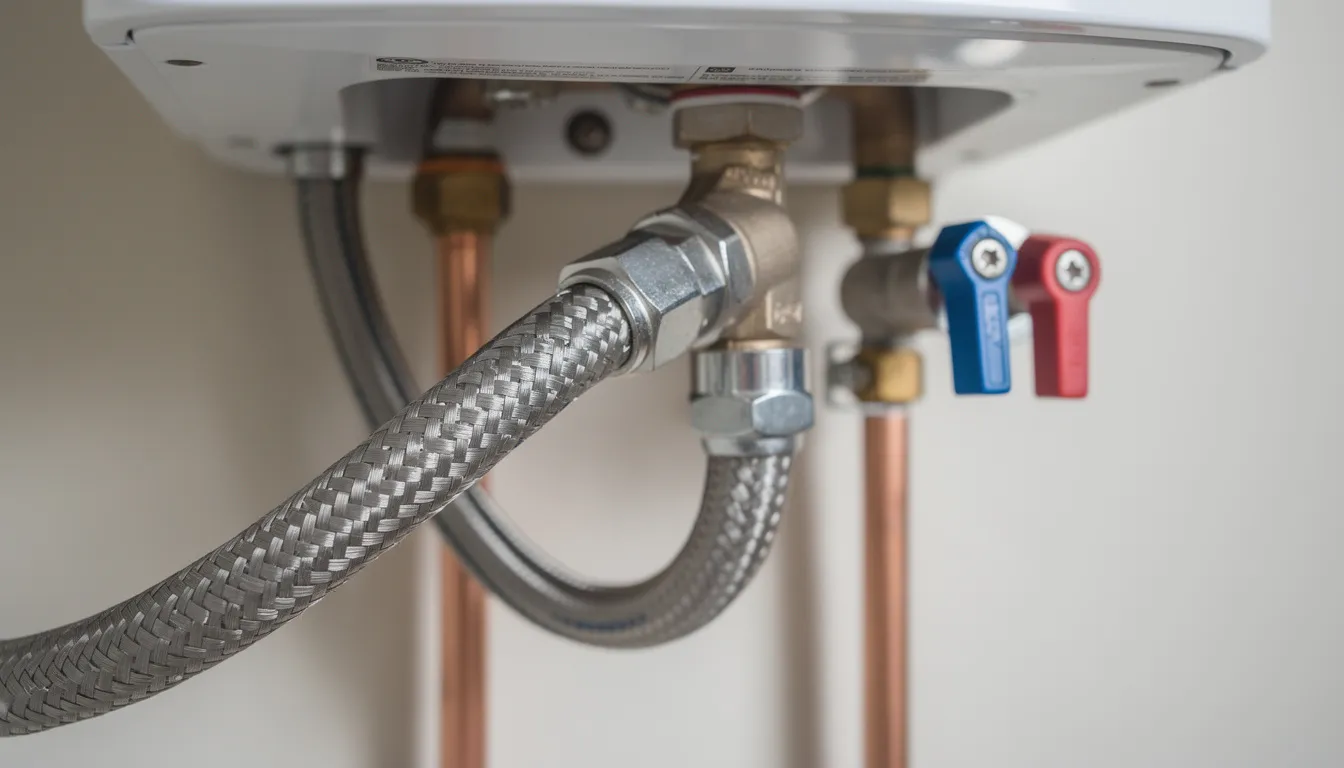
The filling loop valve must be completely closed when you’re done. If left slightly open, the system may over-pressurise as it heats, then lose water via the safety valve—creating the very problem you’re trying to solve.
Never exceed your boiler manufacturer’s recommended pressure. Stop immediately if you hear unusual noises or see any leaks appearing.
When Topping Up Is Not Enough
If pressure falls back under 1 bar within hours or days after topping up, this indicates an underlying fault rather than normal use.
Red flags that topping up isn’t solving the problem:
- Needing to repressurise more than once a month
- Pressure dropping faster when the heating is running
- Visible dripping from the external PRV pipe
- A modern boiler (installed after 2015) losing pressure regularly
Repeatedly adding water without addressing the cause accelerates internal corrosion, potentially turning simple boiler repairs into expensive replacements.
Keep notes of dates and pressure readings to show your engineer. This helps pinpoint whether the pressure loss links to heating use, hot water demand, or specific times of day.
Is a Falling Boiler Pressure Dangerous?
Low pressure itself is generally not dangerous to people. Modern boilers automatically shut themselves down to prevent damage if pressure falls too far below the safe operating range.
The real risks of ignoring falling pressure are:
- No heating or hot water during cold spells in Hamilton—particularly problematic in Scottish winters
- Component damage if the system repeatedly runs on the edge of its safe range
- Hidden water leaks causing structural damage, damp or mould in walls and floors
- Rising energy bills from a system that’s not working properly
Contrast this with high pressure, which can be more immediately harmful to the boiler and pipework if left unchecked. However, both extremes need addressing.
You should switch off the appliance and call an engineer immediately if you notice:
- Any smell of gas
- Signs of scorching around the boiler
- Water escaping from within the boiler case
- Error codes that won’t clear after topping up
Preventing Boiler Pressure Problems in Hamilton & Lanarkshire Homes
A bit of routine care can greatly reduce the chances of pressure issues, particularly in older central heating systems found across Hamilton, Blantyre and Motherwell. Prevention is considerably cheaper than emergency call-outs on a freezing January evening.
Preventative Actions
| Action | Frequency | Typical Cost |
|---|---|---|
| Annual service by Gas Safe engineer | Yearly | £80–120 |
| System flush with fresh inhibitor | Every 5–7 years | £300–500 |
| Magnetic filter installation | Once | £200–300 |
| Pipe insulation in lofts/garages | Once | £50–150 |
An annual service checks expansion vessels, PRVs and internal seals before they fail. Engineers report that 80% of issues can be caught early with reliable annual servicing.
Fitting a magnetic filter on the return pipe catches rust particles before they damage your boiler. This is particularly worthwhile in Lanarkshire systems with cast iron radiators producing high magnetite levels.
Autumn Checklist for Homeowners
Before the heating season begins each year:
- Check all visible pipework and radiators for damp spots or crusty deposits
- Test all radiators for cold spots that might indicate trapped air
- Verify the boiler pressure gauge reads between 1 and 1.5 bar
- Check that the filling loop valves are fully closed
- Inspect the external PRV pipe for signs of dripping
Keep a written log of annual service dates and any repairs made. This helps spot patterns in pressure loss over several heating seasons and provides useful history for any engineer you call.
When to Call a Gas Safe Engineer in Hamilton
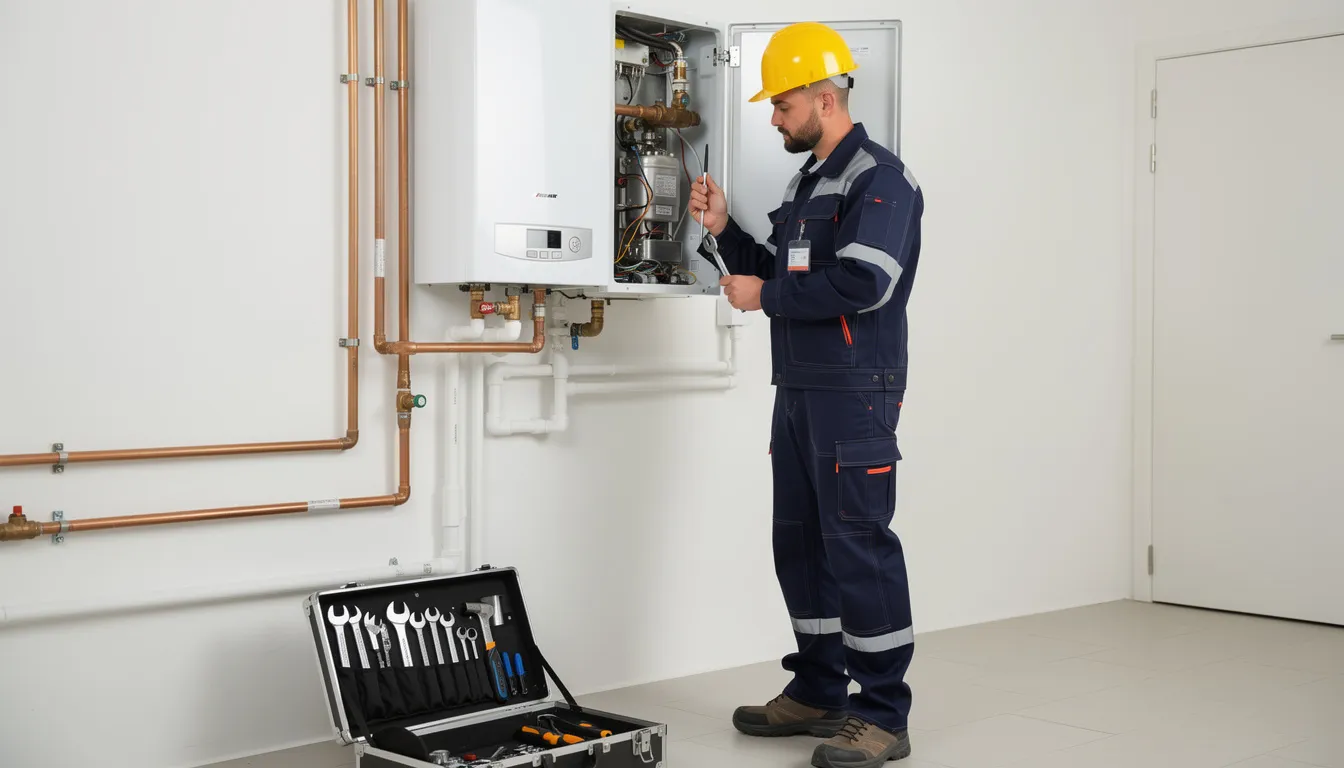
Some situations always justify calling in professional help rather than attempting simple steps yourself.
Contact a Gas Safe registered engineer if you experience:
- Pressure dropping below 0.5 bar repeatedly
- Pressure swinging wildly—very low when cold, almost 3 bar when hot
- Any visible leak from the boiler casing or the external safety pipe
- An error code that keeps returning after topping up
- The need to repressurise more than once every few weeks
Remember that it’s illegal for anyone who is not Gas Safe registered to remove boiler combustion covers or work on gas components in the UK. Always check your engineer’s credentials on the official Gas Safe Register.
When booking an engineer, provide:
- The make and model of your boiler
- How often you’ve had to top up the pressure
- Any work recently done on the system (for example, new radiators fitted in January 2026)
- Your pressure reading log if you’ve been keeping one
Falling boiler pressure is usually fixable once the cause is identified. Whether it’s a minor leak at a radiator valve, a failing expansion vessel, or a PRV that needs replacing, a competent engineer can diagnose and fix most issues in a single visit.
Dealing with pressure problems promptly protects both your heating system and your Hamilton property from more serious damage. If your boiler is losing pressure regularly, don’t keep topping up and hoping—book that service call and get to the root of the problem before winter really sets in.