
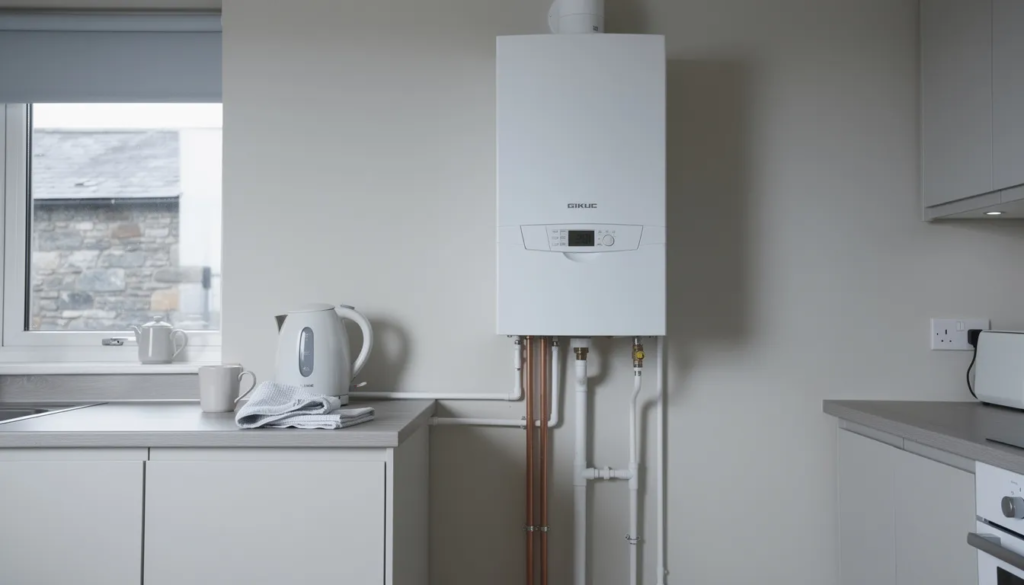
If you’re searching for a new boiler in Scotland in 2026, you’ll want hard numbers rather than vague estimates. The good news is that boiler prices have stabilised after the disruption of recent years, and Scottish homeowners now have clearer options—including generous grant support that can slash upfront costs dramatically.
This guide breaks down exactly what you’ll pay for a new boiler installation across Scotland in 2026, covering every boiler type from compact combis in Edinburgh tenements to oil systems in Highland farmhouses.
New Boiler Costs in Scotland 2026 – Quick Answer
The figures below are specific to Scotland in 2026, reflecting current labour rates, supplier pricing, and regional variations across the country.
A typical fully-fitted gas combi boiler in Scotland costs roughly £1,900–£3,200 including VAT, installation, standard controls, and certification. This covers the boiler unit, flue, magnetic filter, system flush, and labour from a gas safe registered engineer.
For other boiler types fitted in Scotland in 2026:
| Boiler Type | Typical Fitted Cost (2026) |
|---|---|
| Combi boiler (gas) | £1,900–£3,200 |
| System boiler | £2,100–£3,400 |
| Regular boiler | £2,500–£3,800 |
| Electric boiler | £1,800–£3,000 |
| Oil boiler | £3,000–£5,000 |
Prices in Glasgow, Edinburgh, Aberdeen and Dundee tend towards the upper end due to higher labour rates and parking/access challenges. Smaller towns and rural areas may see slightly cheaper labour, though off-grid properties relying on oil or LPG systems often face higher overall costs.
Scottish Government grants and Home Energy Scotland funding can significantly reduce these figures for eligible households—sometimes covering the full cost for those in fuel poverty.
The rest of this article breaks down new boiler prices by type, property size, and installation complexity specifically for Scottish homes in 2026.
What’s Included in a “New Boiler Cost” in Scotland?
When comparing quotes, remember that “boiler cost” should always mean the complete package—not just the appliance sitting in a warehouse.
A proper Scottish boiler quote in 2026 typically includes:
- The boiler unit itself (supply only prices are meaningless without installation)
- Flue system and terminal fittings
- Standard controls (room thermostat, programmer, or basic smart thermostat)
- Magnetic filter to protect against sludge
- System flush or powerflush
- All labour and materials
- Disposal of your old boiler
- Gas Safe certification (or OFTEC for oil systems)
Quotes should be presented as a fixed, all-inclusive price with VAT clearly shown. Be wary of installers who give vague “from” estimates or exclude obvious necessities.
Extras such as WiFi thermostats, replacement radiators, smart zoning, or moving the boiler to a new location are normally itemised separately. Under 2026 Building Regulations and Scottish building standards, certain properties may face minor additional costs for compliant flue routes or condensate drain installations—particularly in older stone buildings.
Average New Boiler Costs in Scotland by Boiler Type (2026)
This section provides a straightforward price guide for the main boiler types found in Scottish homes, using 2026 figures from reputable installers across the country.
All prices quoted are typical fully-fitted costs including VAT and certification. Use these ranges to sanity-check quotes you receive—they’re not fixed prices, as every property has unique requirements.
Combi Boiler Cost in Scotland (2026)
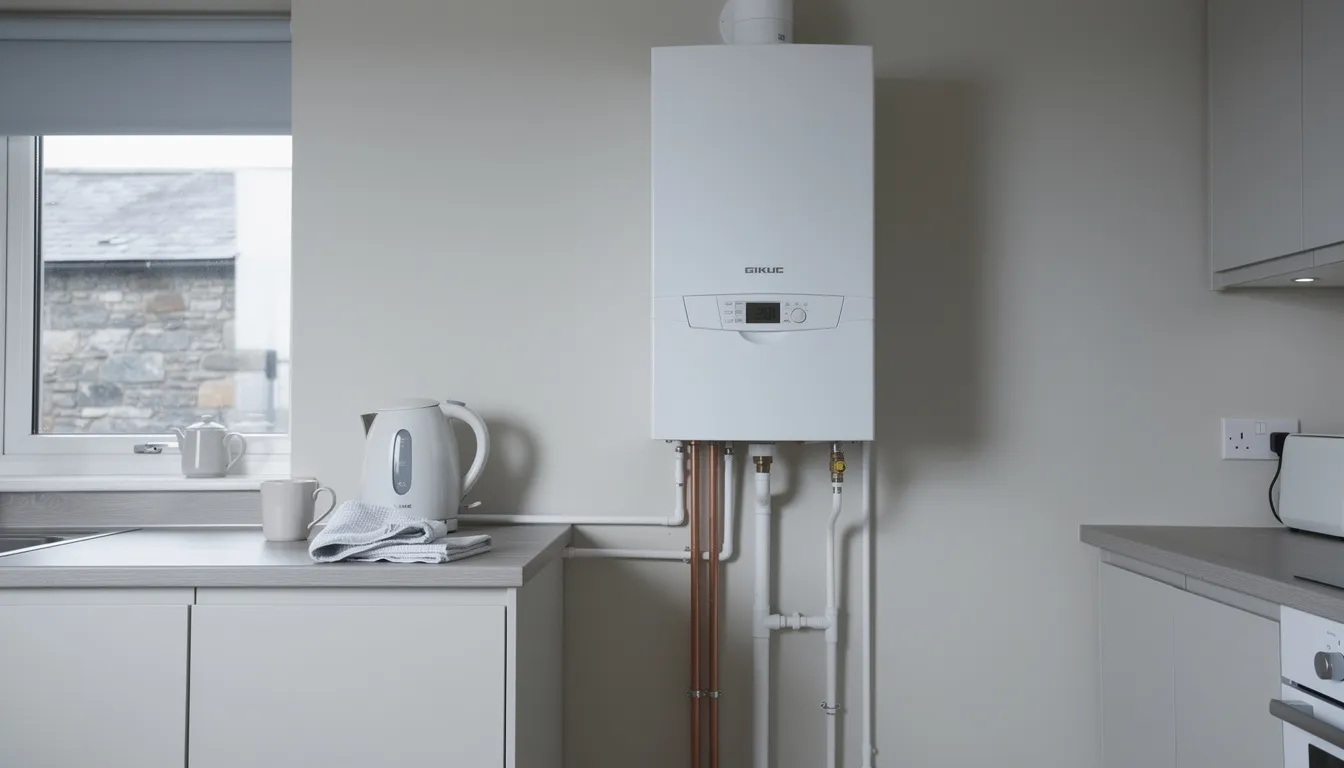
Combi boilers remain the most common choice in Scottish flats and 1–3 bedroom houses with one main bathroom. They provide heating and hot water on demand without needing a separate hot water cylinder or cold water tank in the loft.
Typical 2026 fully-fitted prices for a gas combi boiler in Scotland:
| Output Size | Property Type | Fitted Cost |
|---|---|---|
| 24–25 kW | 1-bed flat, small terrace | £1,900–£2,400 |
| 28–30 kW | 2-3 bed semi, terrace | £2,200–£2,800 |
| 35–40 kW | 3-4 bed detached | £2,600–£3,200 |
Small combis for one-bathroom flats sit at the lower end. Premium 35–40 kW models from leading manufacturers like Worcester Bosch or Vaillant command higher prices but often include extended warranties.
Like-for-like combi-to-combi swaps in the same location are quickest and cheapest—typically one day’s work using existing pipework. A new combi boiler makes sense for gas-connected urban areas such as Glasgow and Edinburgh where space is limited and hot water demands are moderate.
System Boiler Cost in Scotland (2026)
System boilers suit 3–5 bedroom family homes with two or more bathrooms, especially newer Scottish estates where strong mains pressure supports multiple hot water outlets running simultaneously.
Typical fully-fitted 2026 prices in Scotland:
- Basic system boiler replacement (using existing usable cylinder): £2,100–£3,400
- Including new unvented storage cylinder: £3,500–£4,500
System boilers work with a separate hot water cylinder but don’t need tanks in the loft like traditional boilers. They’re ideal for households where the morning shower rush would overwhelm a combi boiler.
Gas, LPG and electric system boilers are all available in Scotland. Electric versions are simpler to install but typically more expensive to run—something we cover in the running costs section below.
Regular (Conventional) Boiler Cost in Scotland (2026)
Regular boilers—also called conventional boilers or heat-only boilers—feed a hot water cylinder and rely on loft tanks for water supply. They’re still common in older Scottish homes and rural properties where mains pressure is low.
Typical fully-fitted 2026 costs in Scotland:
- Replacing existing regular boiler on same system: £2,500–£3,800
- With tank or pipework upgrades: £3,500–£4,500+
Costs rise when tanks or existing pipework need upgrading to meet current safety and efficiency standards. Many Scottish homeowners keep the regular layout if they have low mains pressure or large, draughty period properties where a combi boiler would struggle.
Converting from a regular boiler to a combi or system boiler involves removing tanks and cylinders, altering pipework, and making good—typically adding £500–£1,000 to the project cost.
Electric, Oil and LPG Boiler Costs in Scotland (2026)
Off-gas areas in Scotland—the Highlands, Islands and rural Borders—often rely on electric boilers, oil boilers, or LPG systems. Around 25% of Scottish homes are off the gas grid, making these options essential.
Electric boilers in smaller Scottish homes:
- Wall-hung units: £1,800–£3,000 fitted (assuming no major electrical upgrade needed)
- Running costs are higher than gas—typically £1,000–£2,000 annually versus £500–£1,000 for mains gas
Oil boilers in Scotland (2026):
- Standard domestic oil combi boiler or system: £3,000–£5,000 fitted
- Includes boiler, flue work, and connections to existing oil tank
- Oil tank replacement or installation adds £1,500–£3,000 if needed
LPG boilers are priced similarly to gas combis or systems at £2,000–£3,200 fitted, but you’ll need an LPG tank (owned or rented) and ongoing fuel delivery costs.
How Much Does Boiler Installation Cost in Scotland in 2026?
Beyond the boiler unit itself, installation complexity drives much of your final cost. Understanding labour charges helps you spot reasonable quotes.
In 2026, typical labour for a straightforward boiler swap in Scotland accounts for around £700–£1,200 of the total bill, depending on region and job length. More complex work—conversions, relocations, or re-piping—can lift labour costs towards £1,500–£2,000 or more.
Gas Safe registered engineers are legally required for gas and LPG work; OFTEC certification is mandatory for oil. These certifications should be built into any legitimate quote.
Day rates for experienced boiler installers in Scottish cities typically fall between £250 and £400 per day in 2026, with rural areas sometimes slightly lower but offset by travel time.
Typical Installation Scenarios and 2026 Price Ranges
Here’s what common Scottish installation scenarios typically cost in 2026:
| Installation Type | Typical Total Cost | Usual Duration |
|---|---|---|
| Like-for-like combi-to-combi (same position) | £1,900–£3,000 | 1 day |
| System-to-system (existing cylinder) | £2,100–£3,400 | 1–2 days |
| Regular-to-regular (existing tanks retained) | £2,500–£3,800 | 1–2 days |
| Conversion: regular/system to combi | £2,800–£4,200 | 2 days |
| Boiler relocation within property | +£500–£1,000 | Additional time |
Relocating a boiler—say from kitchen to loft or utility room—adds cost due to extended flue routes, new gas pipe runs, and making good the original location.
Key Factors That Affect Your Final Boiler Cost in Scotland
Scottish properties have their quirks. Tenements, stone cottages, and new-build estates all present different challenges that affect the final cost:
- Property type and size: Tenement flats versus detached houses; more bathrooms and radiators require larger, pricier boilers
- Fuel type and access: Mains gas supply in cities versus LPG/oil in rural areas versus electric where flue routes are problematic
- Installation complexity: New flue runs through stone walls, condensate drains in older properties, boiler relocation, gas pipe sizing under 2026 regulations
- Brand and warranty: Budget versus premium brands and 5-year versus 10–12-year warranties significantly influence boiler cost
- Additional upgrades: New radiators, smart controls, powerflush, or converting from microbore existing pipework all add to the final figure
Boiler Costs in Scotland by Property Size and Type
This section links typical 2026 boiler costs to common Scottish property sizes, giving you realistic expectations before obtaining quotes.
Actual prices depend on survey findings, but these ranges help identify over- or under-priced quotes.
Flats and Small Homes (1–2 Bedrooms)
This covers tenement flats in Glasgow and Edinburgh, modern apartments, and small 1–2 bed houses across Scotland.
Most properties in this category suit a 24–30 kW gas combi or a compact electric boiler where gas isn’t available.
| Property | Recommended Boiler | Typical 2026 Cost |
|---|---|---|
| 1-bed flat | 24 kW combi | £1,900–£2,400 |
| 2-bed flat/terrace | 25–28 kW combi | £2,000–£2,700 |
| Off-gas flat | Electric boiler | £1,800–£2,500 |
Limited space and tricky flue routes in tenements may slightly increase costs where scaffolding or unusual flue configurations are required. Your current boiler location often dictates what’s practical.
Typical Family Homes (3–4 Bedrooms)
This covers most Scottish semis and detached homes built from the 1970s onwards, typically with 1–2 bathrooms.
Suitable options generally include 28–35 kW combi boilers, or system boilers with a hot water cylinder where there are multiple bathrooms demanding hot water simultaneously.
Typical fully-fitted 2026 prices:
- Single bathroom, combi boiler: £2,200–£2,800
- Two bathrooms, system boiler with cylinder: £2,800–£3,400
- Conversion from regular to combi: £2,800–£4,200
Upgrades such as smart controls (Hive, Nest, or similar) and new radiators can add £300–£1,000 to the project but may improve comfort and reduce energy bills over time.
Larger, Older and Rural Scottish Properties
Larger stone villas, farmhouses and rural homes often have 4+ bedrooms, more than one bathroom, and older heating system pipework that’s seen better days.
These properties often retain system or regular boilers—sometimes oil- or LPG-fired—rather than switching to small combis that can’t meet hot water demands.
Typical 2026 price ranges:
- Oil or LPG boiler replacement: £3,000–£5,000
- High-output gas system/regular boiler: £3,000–£4,500
- With major cylinder or pipework upgrades: £4,500–£6,000+
Adding or upgrading large unvented cylinders and improving insulation or radiators pushes total project costs higher, but may be necessary for comfort in colder rural areas. A detailed home survey is essential because heat loss, pipework condition, and water pressure vary enormously.
Gas Boilers vs Low-Carbon Options in Scotland (2026)
By 2026, Scotland is strongly encouraging low-carbon heating as part of its net-zero targets. However, modern gas boilers remain the most common choice for many homes due to lower upfront costs and straightforward installation.
Modern Gas Boilers in Scotland
Modern condensing gas boilers continue to be widely installed in Scottish homes in 2026. They’re significantly cheaper upfront than heat pump alternatives and work with existing radiators without modification.
Typical fully-fitted costs for modern A-rated gas combis and systems: £1,900–£3,400 depending on property size and setup.
All new gas boilers installed in 2026 must be at least A-rated for efficiency, achieving 90%+ seasonal efficiency. This represents a substantial improvement over old boiler efficiency of 70-80%.
Modern boilers integrate easily with smart thermostats and weather compensation controls, helping manage heating bills through Scotland’s long, cold winters.
Air Source Heat Pumps and Other Low-Carbon Options
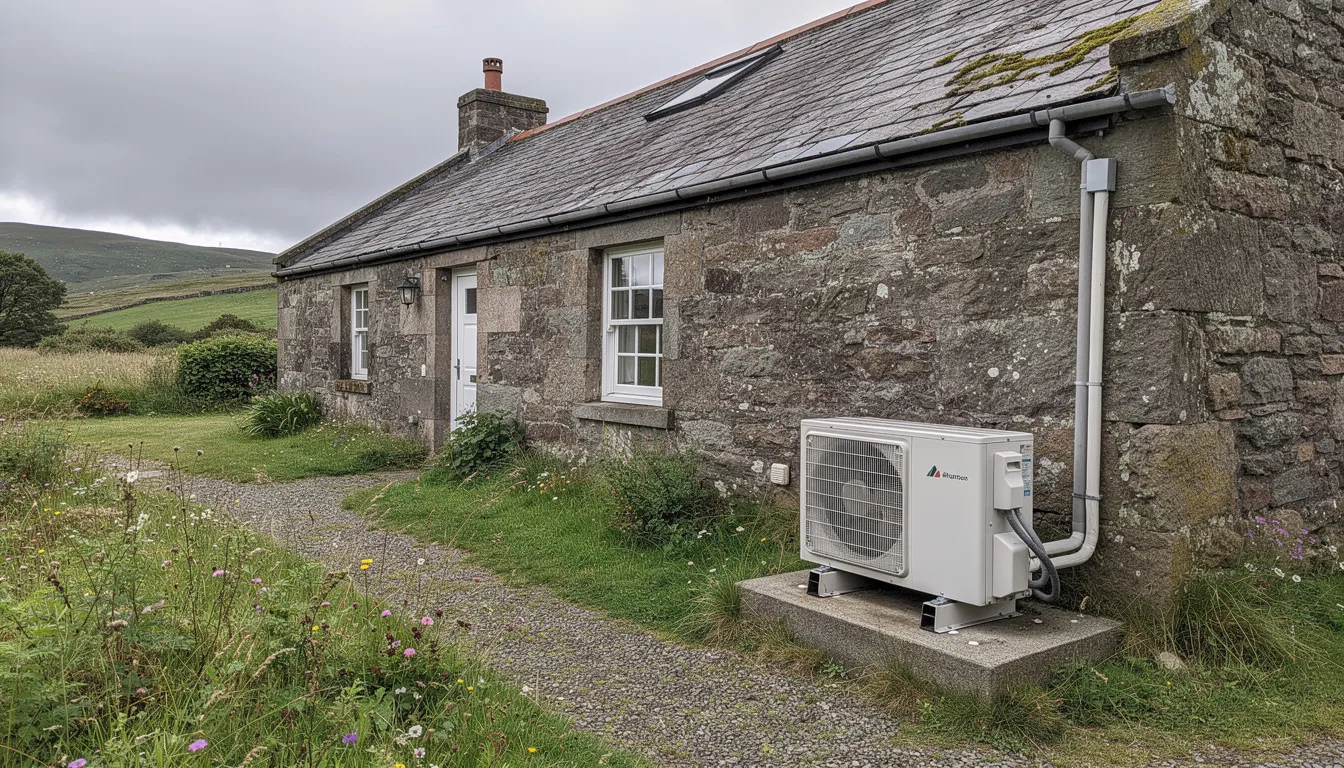
Air source heat pumps extract heat from outside air (even in cold weather) and are increasingly promoted in Scotland as a low-carbon alternative to gas and oil.
Typical 2026 Scottish costs for air source heat pump systems:
- Before grants: £8,000–£14,000
- After typical grant support: £1,000–£6,000
Scottish homeowners may access grants of £7,500–£9,000 through a combination of the UK Boiler Upgrade Scheme and Scottish-specific funding via Home Energy Scotland.
Heat pumps work best in well-insulated homes with larger radiators or underfloor heating. Older, poorly insulated Scottish properties may face extra upgrade costs to make a heat pump viable.
Many households compare a lower-cost gas boiler replacement today against a potentially grant-supported heat pump, weighing long-term running costs and carbon impact. Biomass boilers offer another option at £10,000–£18,000 installed, though they’re mainly suited to rural properties with fuel storage space.
Running Costs, Efficiency and Savings in Scottish Homes
The purchase price is only part of the picture. Running costs over 10–15 years matter enormously in Scotland’s climate, where heating accounts for a large share of household energy bills.
Approximate annual running costs in 2026 (typical 3-bed Scottish home):
| Fuel Type | Annual Heating Cost |
|---|---|
| Mains gas | £500–£1,000 |
| Oil | £700–£1,200 |
| LPG | £800–£1,400 |
| Electric (direct) | £1,000–£2,000 |
| Heat pump | £400–£800 |
Upgrading from a non-condensing boiler fitted before about 2005 to a modern A-rated boiler could save around £200–£300 a year on gas bills in a typical Scottish semi, depending on usage and tariffs.
Energy efficient boilers alone don’t guarantee savings. Smart controls, weather compensation, and proper system balancing all reduce energy waste during cold Scottish winters. Many installers now include basic smart thermostats as standard.
Think about total cost of ownership: initial installation cost plus 10–15 years of fuel and annual boiler service costs. Sometimes paying more upfront for a premium, energy efficient boiler with a longer warranty makes financial sense.
Grants and Funding for New Boilers in Scotland (2026)
Scotland offers its own support schemes on top of UK-wide programmes, potentially cutting the cost of new heating systems dramatically—or even eliminating upfront costs entirely for eligible households.
Details change annually, so always verify current eligibility with Home Energy Scotland before committing to any purchase.
Key Scottish Schemes: Home Energy Scotland and Warmer Homes Scotland
Home Energy Scotland is the main advice service funded by the Scottish Government. It offers:
- Grants for heat pumps and low-carbon heating
- Interest-free loans (typically up to £7,500–£15,000) for energy efficiency improvements
- Free, impartial advice on reducing heating bills
In 2026, packages often include substantial grants for heat pumps and sometimes support for replacing very inefficient traditional boilers, plus loans for associated works like insulation.
Warmer Homes Scotland targets households in or at risk of fuel poverty. It can cover the full cost of a new central heating system—including boiler or heat pump—for eligible applicants.
Eligibility is usually based on:
- Household income and benefits
- Property type and condition
- Current energy performance rating
An assessment is required to qualify. Anyone struggling with heating bills in Scotland should contact Home Energy Scotland first, before committing to getting a new boiler.
UK-Wide Schemes Affecting Scotland (ECO4 and Boiler Upgrade Support)
ECO4 is a Great Britain-wide obligation on energy suppliers to fund energy-efficiency measures. This can include boiler replacement and insulation in qualifying Scottish homes, particularly for low-income households or those with poor energy ratings.
The Boiler Upgrade Scheme (or its successor arrangements) offers grants of £7,500 for air source heat pumps and £5,000 for biomass boilers. Scottish homes can access these where they meet the criteria—primarily replacing fossil-fuel systems in properties off the gas grid or choosing to switch away from gas.
These schemes in 2026 prioritise replacing old fossil-fuel systems with low-carbon options, not simply like-for-like gas boiler replacement costs.
Check combinations of Scottish and UK support to see whether a heat pump or hybrid system could work out similar in net cost to a straightforward boiler replacement.
When Should You Replace Your Boiler in Scotland?
Many Scottish homeowners try to “squeeze another winter” out of an existing boiler, but this can be a false economy.
Typical modern boilers last about 10–15 years. After this, efficiency ratings drop and repair costs often rise sharply. An old combi boiler limping through its 15th winter is probably costing you more in wasted fuel than you’re saving by avoiding replacement.
Warning signs that suggest boiler replacement rather than repair:
- Frequent breakdowns (more than one repair per year)
- Rising gas or oil bills despite similar usage
- Strange noises (banging, whistling, gurgling)
- Yellow or uneven flames instead of crisp blue
- Failing to heat all radiators properly
- Taking ages to heat water
Safety first: Any sign of carbon monoxide issues or a failed safety check means immediate action with a Gas Safe or OFTEC engineer—not just cost considerations.
If a repair quote exceeds £400–£500 on a boiler older than 10–12 years, it’s often worth pricing up a boiler replacement instead.
Choosing the Right Boiler Type for Your Scottish Home
The “cheapest” boiler isn’t always cheapest overall. Matching the type of boiler to your property matters more than chasing the lowest headline price.
Combi boilers suit:
- Smaller, well-insulated homes or flats
- Properties with one main bathroom
- Homes with reasonable mains pressure
- Those wanting to remove tanks and cylinders
System boilers suit:
- Modern family homes with two or more bathrooms
- Properties with strong mains pressure
- Households with simultaneous hot water system demands
- Homes with space for a storage cylinder
Regular boilers still make sense for:
- Older Scottish homes with low mains pressure
- Properties with existing open-vented systems expensive to alter
- Large houses where hot water demands are high
- Rural properties with existing tank infrastructure
Electric, oil and LPG options fill gaps where mains gas supply or suitable flue routes aren’t available. Running costs and tank space must be factored in.
Have a proper home survey so that boiler size (kW output) matches correctly to radiators, bathrooms, and Scottish climate conditions. An undersized boiler struggles; an oversized one wastes money.
Getting Accurate Boiler Quotes in Scotland for 2026
Online boiler quote online tools provide useful ballpark figures, but a proper home visit or detailed video survey is essential for an accurate fixed price.
How to get reliable quotes:
- Obtain at least two or three written, like-for-like quotes from Gas Safe registered installers based in Scotland
- Compare what’s included: make and model, warranty length, system flush type, magnetic filter, controls, and allowance for unforeseen work
- Insist on fixed-price quotes with no hidden extras
- Check payment terms, including any 0% or low-rate finance if offered
- Verify installer credentials via the Gas Safe Register
- Read recent online reviews and ask about workmanship guarantees
Reputable installers won’t pressure you. They’ll explain why they’re recommending a particular boiler for your home and provide a written quote valid for at least 30 days.
Be cautious of quotes significantly below average—they may exclude essentials or reflect inexperienced installers who underestimate the work involved.
Summary: What a New Boiler Really Costs in Scotland in 2026
Most Scottish households in 2026 will spend between £1,900 and £3,400 on a fully fitted A-rated gas boiler. Larger properties, off-grid homes, and complex installations push costs higher—sometimes significantly so.
The main drivers of your final cost are:
- Property size and number of bathrooms
- Boiler type (combi, system, regular, oil, electric)
- Installation complexity (conversion, relocation, pipework condition)
- Location (city versus rural, mains gas versus off-grid)
- Brand choice and warranty length
Grants and funding via Home Energy Scotland, Warmer Homes Scotland, ECO4 and UK-wide schemes can substantially cut upfront costs—particularly for low-carbon systems where eligible households may pay little or nothing.
Balance upfront price with long-term running costs, reliability and warranty cover. The cheapest headline figure rarely represents the best value over a boiler’s 10–15 year lifespan.
Your next step: Arrange a home survey with two or three local installers, or contact Home Energy Scotland to check what funding you might qualify for. Armed with the information in this guide, you’ll be well-placed to recognise fair boiler prices and choose the right heating system for your Scottish home in 2026.